https://youtu.be/Jo1XgDJCkh4
1) Wide and deep moats so good that idiots can run - examples include KO, See’s Candy, MCO, V, MA, AMEX. Most take advantage of human vices.
2) Deep moats, but management needs to be competent. Examples include Restaurant Brands International, Amazon, Yum Brands, Dominos Pizza. Marriott International, Costco, Geico
3) Markets confused between risk and uncertainty. Examples include IPSO, Frontline, FCAU, Tesoro, Teck cominco
4) Special Situations. Examples include Danielson Holdings and Coventa
5) Upside without downside. Example - Silicon Valley Bank
Saturday, February 3, 2018

Saturday, October 28, 2017
Howard Hughes Corporation Valuation
Horizon Kinetics 3Q17 letter gives the following fair value estimates for HHC properties:
South Street Seaport, Manhattan, NY - $2.5B to $3B
Houston Assets, Houston, TX - $4.25
Summerlin, Las Vegas, NV - $2.5B
Columbia, MD - $0.57B
Ward Village, Honolulu, HI - $2.5B
Other properties - $0.48B
Total = $13B
In Pershing Square’s May 2017 Ira Sohn presentation, Bill Ackman values all properties except Summerlin and Ward as approximately equal to the enterprise value of the company. If you assume that Summerlin and Ward are worth $2.5B each, as Horizon Kinetics does, then Ackman’s back of the envelope valuation also yields a $13B intrinsic value.
South Street Seaport, Manhattan, NY - $2.5B to $3B
Houston Assets, Houston, TX - $4.25
Summerlin, Las Vegas, NV - $2.5B
Columbia, MD - $0.57B
Ward Village, Honolulu, HI - $2.5B
Other properties - $0.48B
Total = $13B
In Pershing Square’s May 2017 Ira Sohn presentation, Bill Ackman values all properties except Summerlin and Ward as approximately equal to the enterprise value of the company. If you assume that Summerlin and Ward are worth $2.5B each, as Horizon Kinetics does, then Ackman’s back of the envelope valuation also yields a $13B intrinsic value.
Sunday, April 9, 2017
Texas Pacific Land Trust -TPL
I noticed that TPL is the largest holding for Horizon Kinetics and decided to study it. Here is what I have found out.
TPL has 877553 total surface acres in Texas.

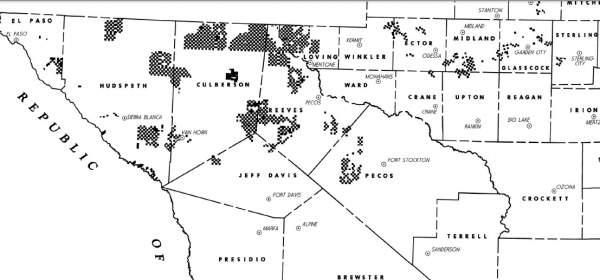
236194 of these surface acres have a 1/16 non-participating perpetual royalty interest and 32536 of these surface acres have 1/128 non-participating perpetual royalty interest. Furthermore, the Trust has 1/16 and 1/128 non-participating perpetual royalty interests in 137583 acres and 52878 acres in which the Trust has no surface ownership. The oil & gas royalties from these acres account for about half of the earnings, and royalty revenues are growing fast - about 50% growth for each of the last two years despite an oil price slump because the Midland and Delaware basins are the hottest shale plays on the planet.
With only 10 employees, no debt, no capex, extremely low expenses, and huge exposure to accerating growth in the Permian Basin, an interesting case for TPL as a Rip Van Winkle stock can be made, but at 60x earnings, I am going to wait for a better entry point (which might never come).
TPL has 877553 total surface acres in Texas.
236194 of these surface acres have a 1/16 non-participating perpetual royalty interest and 32536 of these surface acres have 1/128 non-participating perpetual royalty interest. Furthermore, the Trust has 1/16 and 1/128 non-participating perpetual royalty interests in 137583 acres and 52878 acres in which the Trust has no surface ownership. The oil & gas royalties from these acres account for about half of the earnings, and royalty revenues are growing fast - about 50% growth for each of the last two years despite an oil price slump because the Midland and Delaware basins are the hottest shale plays on the planet.
With only 10 employees, no debt, no capex, extremely low expenses, and huge exposure to accerating growth in the Permian Basin, an interesting case for TPL as a Rip Van Winkle stock can be made, but at 60x earnings, I am going to wait for a better entry point (which might never come).
Friday, March 31, 2017
EVCM fund's investment thesis for USO
Emerging Value Capital Management, LLC
Full Year 2016 Letter to Investors
Short USO (Oil ETF)
United States Oil Fund (Ticker: USO) is an ETF that is supposed to track the price of a barrel of oil (WTI - west Texas intermediate oil). In theory, it is an interesting financial product that allows investors to easily invest in (or bet against) the future price of oil. It is mostly owned by retail investors that view it as a proxy for directly owning barrels of oil.
Like many Wall-Street “products”, USO is a wolf in sheep’s clothing. USO does not own any oil directly. Instead, it uses futures contracts to gain exposure to the price of oil. Because these futures contracts are usually in contango (front months cheaper than later months), USO suffers from “roll decay” which makes it lose value over time. Every month, USO needs to sell the front month futures contracts that it owns and replace them with futures contracts that are one month further out, and therefore more expensive. As the month goes by, the newly purchased futures contracts become the front month futures contracts and the process repeats again, every month, forever. This can be summarized as “buy high, sell low, repeat every month forever”. Simply put, USO does not accurately track the price of oil and is likely to cause large losses over time to its investors.
We have been short USO on and off in the past and it served us well, especially towards the end of 2014 and again in 2015 as the price of oil fell sharply. We closed out most of the position at a nice profit at the end of 2015. With WTI Oil prices up about 45% in 2016, we think it is shocking that USO was up only about 7%, lagging by almost 38%. WTI Oil now trades around $54 per barrel, so we think USO is once again an attractive short and we recently we re-established a large short position. Over the years, shorting USO has proven to be the gift that keeps on giving and we fully expect this to continue in the future.
United States Oil Fund (Ticker: USO) is an ETF that is supposed to track the price of a barrel of oil (WTI - west Texas intermediate oil). In theory, it is an interesting financial product that allows investors to easily invest in (or bet against) the future price of oil. It is mostly owned by retail investors that view it as a proxy for directly owning barrels of oil.
Like many Wall-Street “products”, USO is a wolf in sheep’s clothing. USO does not own any oil directly. Instead, it uses futures contracts to gain exposure to the price of oil. Because these futures contracts are usually in contango (front months cheaper than later months), USO suffers from “roll decay” which makes it lose value over time. Every month, USO needs to sell the front month futures contracts that it owns and replace them with futures contracts that are one month further out, and therefore more expensive. As the month goes by, the newly purchased futures contracts become the front month futures contracts and the process repeats again, every month, forever. This can be summarized as “buy high, sell low, repeat every month forever”. Simply put, USO does not accurately track the price of oil and is likely to cause large losses over time to its investors.
We have been short USO on and off in the past and it served us well, especially towards the end of 2014 and again in 2015 as the price of oil fell sharply. We closed out most of the position at a nice profit at the end of 2015. With WTI Oil prices up about 45% in 2016, we think it is shocking that USO was up only about 7%, lagging by almost 38%. WTI Oil now trades around $54 per barrel, so we think USO is once again an attractive short and we recently we re-established a large short position. Over the years, shorting USO has proven to be the gift that keeps on giving and we fully expect this to continue in the future.
Saturday, February 25, 2017
Appeals Court Ruled Breach of Contract Claims are Ripe
http://www.fairholmefundsinc.com/Documents/PublicConferenceCall20161118.pdf
Fairholme Capital Management Public Conference Call
November 18, 2016
November 18, 2016
David Thompson: Yes, there are three standard remedies for a breach of
contract.
One is expectancy damages, which puts us in the position that we would have been in if there had been no breach of contract. Two is reliance, which is to give us our out-of-pocket costs. The third is restitution. We’re entitled to present evidence of all three and pick the highest.
But, I want to focus on restitution, because I think that is really the concept that is the most relevant here, and it’s pretty simple. You look at the benefits that the breaching party received – and here the breaching party would be Fannie Mae and Freddie Mac – and the benefit they received was par value, $25 a share. From that, you would potentially subtract any benefits as they would probably argue for an offset of any dividends that the preferred shareholders received. Now as we know, two thirds of this float was issued in 2007 and 2008. So, for those series the offset from par value would be somewhere between zero and five dollars a share. Thus, we could be looking at damages of $20 a share if we are successful on our breach of contract claim and the court agrees with us about restitution.
One is expectancy damages, which puts us in the position that we would have been in if there had been no breach of contract. Two is reliance, which is to give us our out-of-pocket costs. The third is restitution. We’re entitled to present evidence of all three and pick the highest.
But, I want to focus on restitution, because I think that is really the concept that is the most relevant here, and it’s pretty simple. You look at the benefits that the breaching party received – and here the breaching party would be Fannie Mae and Freddie Mac – and the benefit they received was par value, $25 a share. From that, you would potentially subtract any benefits as they would probably argue for an offset of any dividends that the preferred shareholders received. Now as we know, two thirds of this float was issued in 2007 and 2008. So, for those series the offset from par value would be somewhere between zero and five dollars a share. Thus, we could be looking at damages of $20 a share if we are successful on our breach of contract claim and the court agrees with us about restitution.
Sunday, December 25, 2016
114 North American Oil &Gas Bankruptcies Since start of 2015
http://www.haynesboone.com/~/media/files/attorney%20publications/2016/energy_bankruptcy_monitor/oil_patch_bankruptcy_20160106.ashx
Saturday, July 2, 2016
Herbalife v. Vemma: Pyramid Scheme Analysis
Updated to use 2015 numbers. Analysis is located here
https://docs.google.com/document/d/1VxTno_lidEMqvWZfjTJ7OVUHstqYji-w7H_V33cLO-k/edit?usp=sharing
https://docs.google.com/document/d/1VxTno_lidEMqvWZfjTJ7OVUHstqYji-w7H_V33cLO-k/edit?usp=sharing
Subscribe to:
Posts (Atom)